Nội dung chính
Đánh giá thị trường căn hộ Hà Nội quý 3/2025
Thị trường bất động sản bán lẻ Hà Nội đang ghi nhận mức tăng trưởng đáng chú ý, với giá thuê và công suất cải thiện mạnh mẽ.
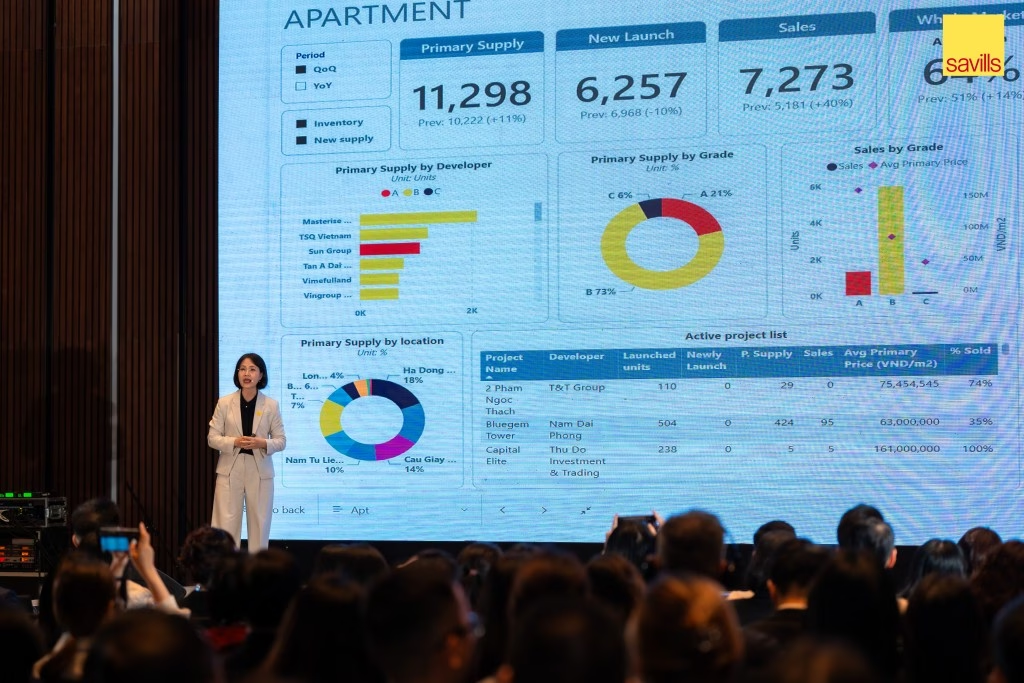

The latest quarterly report of Savills Việt Nam shows that retail space in Hanoi reached 1.8 million m², with shopping‑centres still dominating the supply mix.
Công suất và giá thuê
Overall occupancy rose by 1 percentage point year‑on‑year, climbing to 85 %. The surge is largely driven by successful repositioning of existing malls that attract younger shoppers. Ground‑floor rents increased 3 % across all zones, now averaging VND 1.3 million / m² / month. The central district recorded the steepest rise, while peripheral zones saw moderate growth.
Mật độ bán lẻ và các khu vực tiềm năng
Inner‑city districts posted the highest retail density at 0.5 m² per capita, cementing their role as Hanoi’s primary commercial hub. Emerging corridors such as Cầu Giấy, Thanh Xuân and Hà Đông are gaining traction thanks to new metro lines and rising foot traffic, narrowing the rent gap with the central area.
Dự báo nguồn cung 2025‑2028
By the end of 2025, more than 84,000 m² of new retail floor area will be added. From 2026 to 2028, supply is expected to exceed 330,000 m², driven mainly by the Starlake development. The large hand‑over volume in 2027‑2028 could intensify competition and raise the risk of oversupply if projects lack clear differentiation.
Thị trường căn hộ – xu hướng hấp thụ
In the same quarter, Hanoi’s condominium market remained resilient. New supply slipped slightly year‑on‑year but still grew to 6,300 units. Sales reached 7,300 units, delivering an absorption rate above 80 %, well higher than the city‑wide average. Buyers favour newly launched projects with modern designs, superior amenities and flexible payment schemes.
Price pressure continues upward. In the first nine months of 2025, units priced over VND 4 billion accounted for the majority of sales, while no transaction fell below VND 2 billion. The shortage of affordable apartments in the capital pushes demand toward satellite cities, prompting Hanoi to accelerate social‑housing and worker‑housing programmes.
Triển vọng Q4 2025
Q4 2025 is projected to welcome roughly 8,900 new units, primarily B‑class apartments. A more abundant supply is anticipated from 2026 onward, which will test developers’ ability to differentiate products and maintain price stability.
For investors and developers, the key takeaway is to focus on locations with improving transport connectivity and to design offerings that meet the expectations of younger, experience‑oriented buyers.